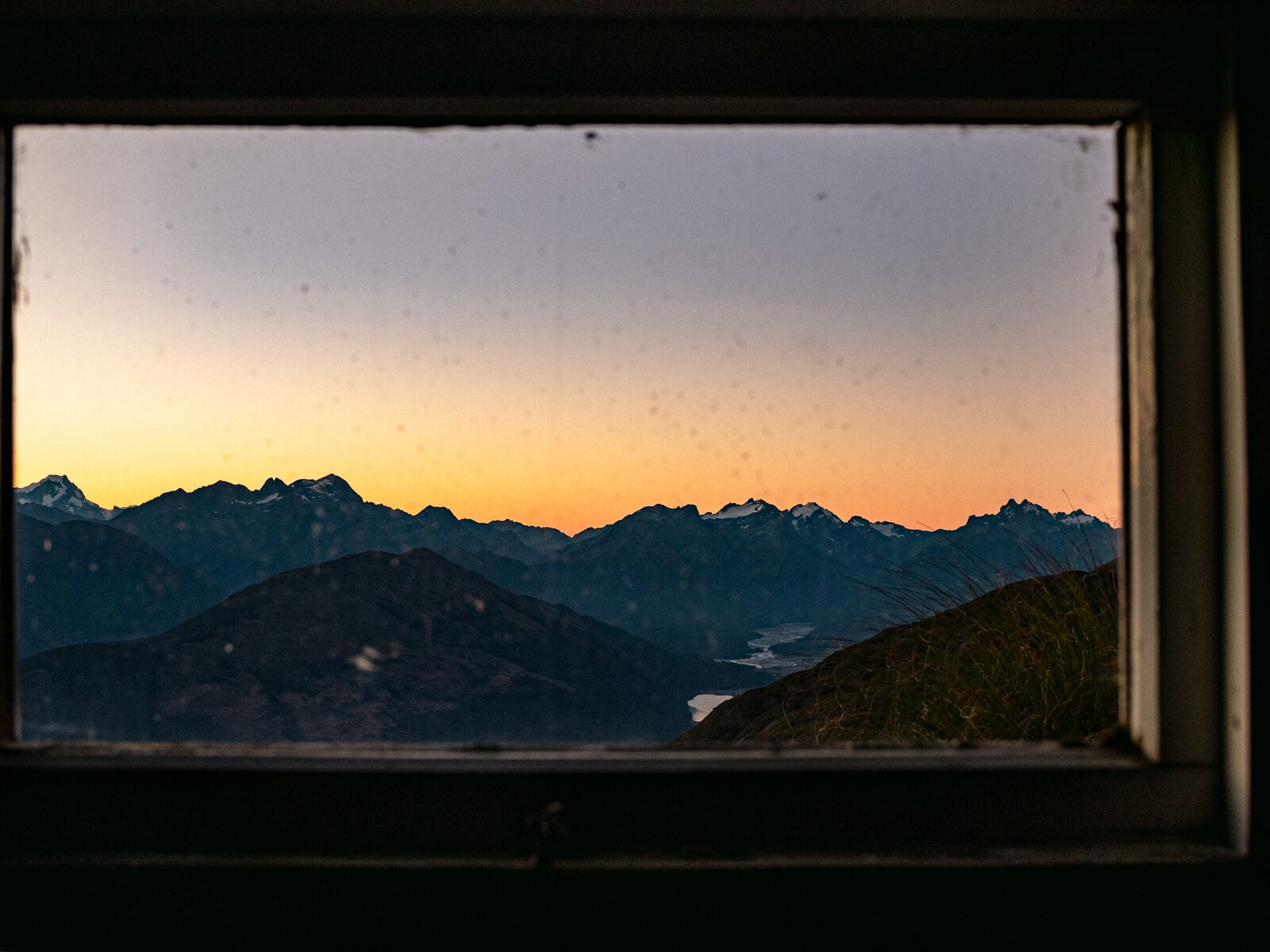
A 5-to-9 adventure.
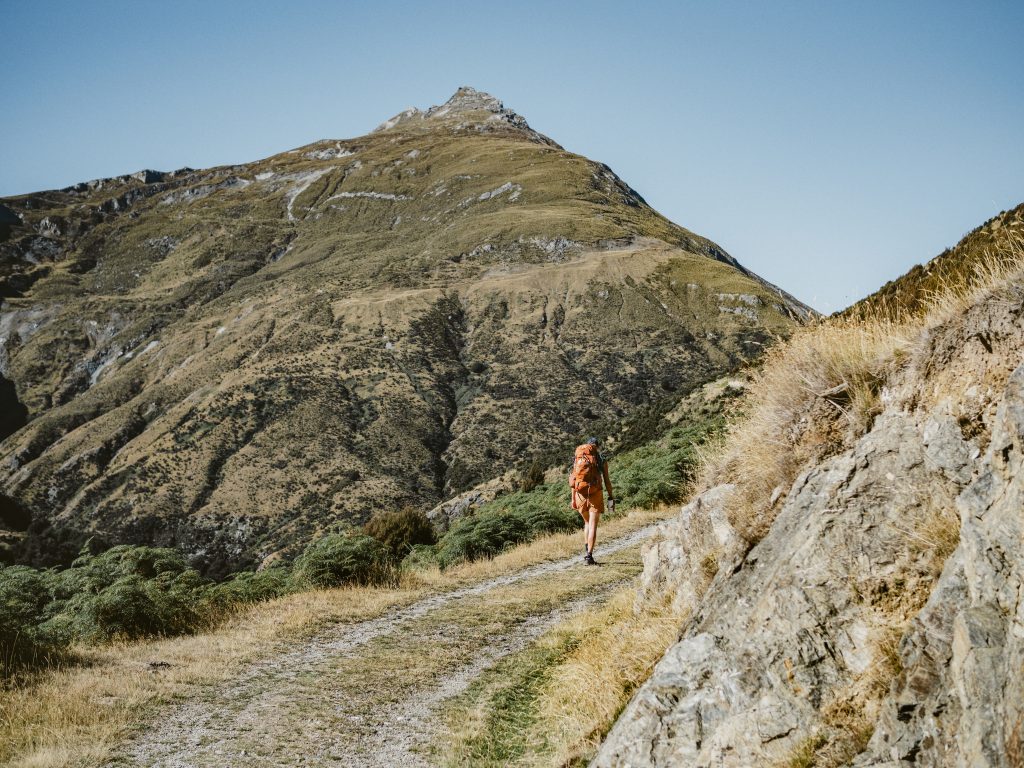
We sweated up the last few metres and reached Long Gully Saddle, where we passed a sign telling us it was only another 30 minutes to our destination for the night. My calves burned, my bag felt heavy, the path felt steeper than any previous bit of the trail, and I kept slipping on the loose gravel.
After what seemed like far longer than 30 minutes, we reached an outbuilding where the path wound round, teasing us one last time before we reached the flat ground outside the McIntosh Hut. We dumped our bags, hung our soaking T-shirts on the wooden porch and turned around to take in the view we’d sweated up the hillside for.
The 360-degree panorama from our 1464-metre perch looked across Lake Wakatipu to the Humboldt Mountains in one direction and over towards Tititea Mount Aspiring in the other. After slowly taking it all in, we turned our attention to the hut itself. The various articles we’d read had promised the McIntosh Hut was a bit different from standard Department of Conservation (DOC) huts, and we were not disappointed.
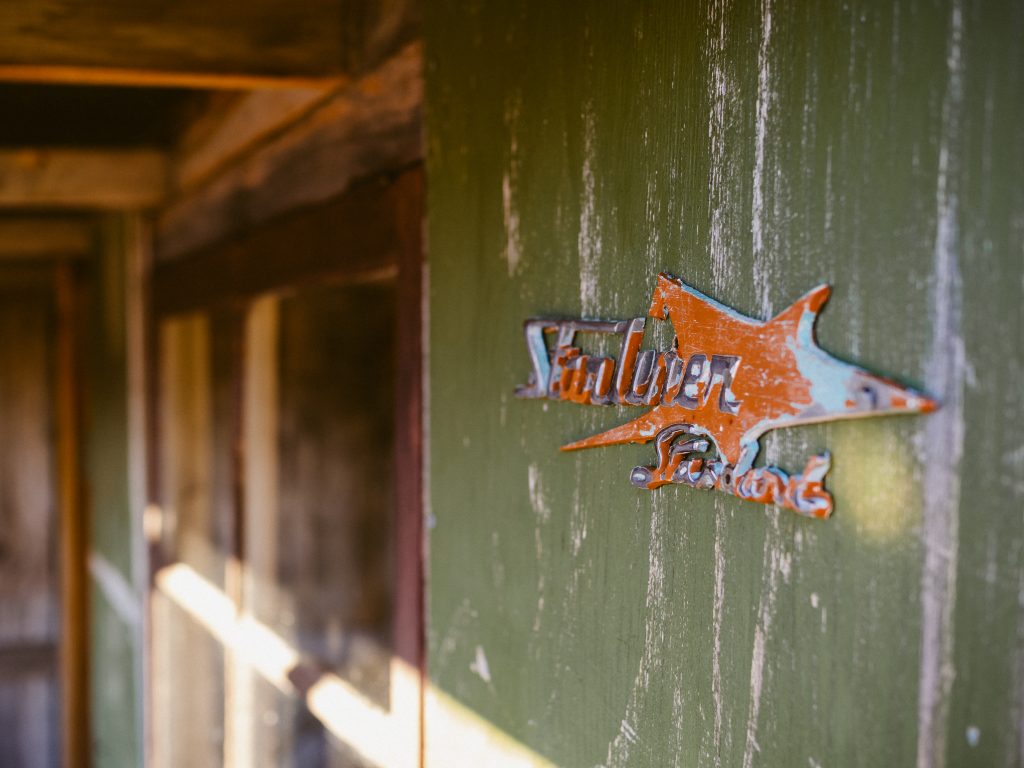
Built in 1915 for the miners working the scheelite mines that were common in the Whakaari Conservation Area, the hut is a classic tin structure with a wooden extension. Towards the door there is, somewhat inexplicably, a chrome-plated 1950s emblem from the Christchurch-based Starliner Caravans mounted on the wall. Inside is a simple two-room hut, the main room being the more atmospheric. One alcove contains a table littered with old tools, brown with age. Next to that is a kitchen that probably hasn’t changed much since the hut was first built. A row of kettles nestle on a shelf under the low ceiling, caked in years of dust and rust, above a disused gas stove and a sink where a saucepan lies upturned as if it’s been drip drying since the 80s.
We need your help
READ MORE
In the rest of the room is a wooden table with large saucepan rings burned into its top, two benches, a candle holder, the DOC book, and an empty bookcase covered in mountain sketches. The only splashes of colour in the otherwise entirely brown room are a postcard tacked to a pillar underneath a rusty horseshoe and an incongruous pile of red spotted plates underneath the kitchen counter. There’s a big step up into the bunk room which has four simple bunks with mattresses; its only notable feature is the view from the window near the ceiling, which, to be fair, redeems the room entirely. On the beam above the five-foot doorway back into the main room, is the sage advice of “watch your noggin”, written in black marker pen.
Our home for the night inspected, we noticed the sky was beginning to slide into a dusky evening. We layered up, grabbed the packet of chips and the bottle of red wine we’d carried up from Glenorchy, and sat on the bench outside. At this point, having smugly thought we had the hut to ourselves, we were joined by a solo hiker who’d had to change his plans on finding his original hut full. In the spirit of camaraderie, we shared our chips.
We watched as the skies around us changed from bright blue to golden orange to finally a vast and deep inky blue, like someone was playing around with the saturation and hue sliders on Photoshop. We watched as the mountains opposite lost their features and gradually turned to one imposing silhouette of ridgeline. And we watched as the stars appeared, shining beyond anything I have ever seen before. We finally tore ourselves away, headed indoors, lit the candles and cooked some dinner.
After a few hours tossing and turning on my top bunk, I snuck outside with my sleeping bag. The cool night was the perfect temperature. I found the flattest spot possible and made my bed. I still couldn’t sleep, but this time I was kept awake by the shooting stars, the Milky Way, the Southern Cross, the wonder of it all. Sometime around 6am, my partner came out of the hut and we sat huddled in our sleeping bags as the hulking mass of ridgeline grew less menacing and the sky blushed pink. The day yawned and stretched awake.
***
It was hard to leave the McIntosh Hut that morning and that feeling of being perched so far above civilisation that problems and stresses blurred into the distance like atmospheric haze. Of being cloaked in a blanket of peace. And that’s part of the point of adventures isn’t it, to find that feeling? Even though, at some point, the outdoor community seems to have started associating the word “adventure” with big epic expeditions, with vast landscapes and high mountains that needed to be discovered, crossed, conquered, summited. It’s easy to become sucked into a world of FKTs (fastest known times), record attempts, going the furthest and the fastest for no reason apart from going the furthest and the fastest. But if you strip away at what actually makes up an adventure, you’ll find many things ̶ a trying of something new, a going to somewhere novel, a pushing out of your comfort zone. The Latin root of the word is “advenire”, meaning to arrive, or to happen. At its core, adventure is an appetite for experience, exploration, questioning.
All of these can be found in the 5-to-9 adventure.
The idea is simple: for those who work a 9am to 5pm job, instead of only adventuring during weekends or holidays, we can start to see the hours between the end of one work day and the start of the next working day as an opportunity to find that feeling. The British writer and adventurer Alastair Humphreys is a big proponent of these micro-adventures, everyday opportunities to find these elements closer to home and in a more achievable way for most “normal people with real lives.” And Aotearoa has more than 950 Department of Conservation-managed huts. That’s a lot of overnight options for 5-to-9 adventures, before you’ve even thought about campsites.
This ethos, as we found out, works for freelancers and travellers too. Our McIntosh Hut exploit showed it’s more than doable to have an adventure that’s 5-ish-to-9 (ish). We left the Whakaari Conservation Area car park at 3pm. We took our time as we headed up the track, didn’t rush over the infamous Buckler Burn river crossing, and definitely dawdled up the vicious switchbacks leading up to Long Gully Saddle. We arrived at the hut just after 7pm, enough time on a perfect March day to settle in before the sunset. Had we returned the same route we’d come up and not the steep tussocky downhill we circled back on, and had I been more of a morning person, we could easily have made it back to the car by 10am.
***
In the end, our night at the McIntosh Hut was one of the highlights of our five-week trip visiting the country from the UK, during which time we also tramped the Kepler and Queen Charlotte Tracks and cycled the Alps 2 Ocean route. It wasn’t the most technical of our hikes, and it certainly wasn’t the longest. We still had cell service and we were able to carry a bottle of wine up the trail.
But it was the most memorable because it felt like we were doing something different. What we got out of the trip vastly outweighed the effort we put in, and to lie under the night sky wrapped in stillness is proof that, as Alastair Humphreys writes, “adventure can be found everywhere … it is [just] up to us to seek it out.” All of that experience ̶ the going somewhere new, the trying something novel (for me, the first night in a proper DOC mountain hut), the exploration, the seeking, the views, the sunsets, the stars, the sunrise, and that feeling of utter contentment ̶ was achievable in a short window.
Snuggled in our sleeping bags on that high plateau, time slowed down as we watched the skies dart and wake.
Words & Photos: Sarah Hewitt
