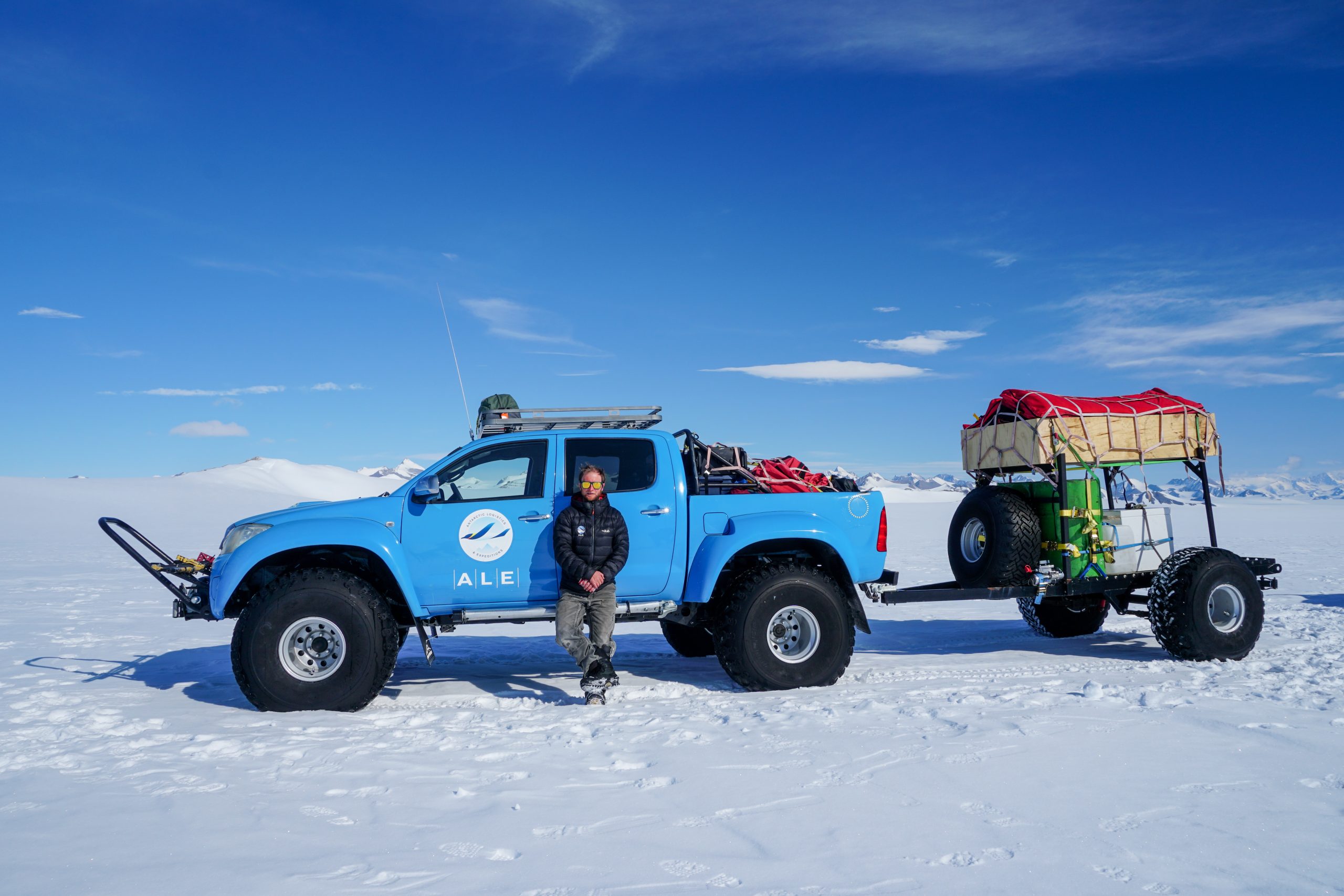
Adventures at the ends of the earth are just another day at the office for Ben Comeskey.
It was -25℃ outside, possibly even colder. And that was before factoring in wind chill, which Ben Comeskey says was considerable: sustained and roughly 60 knots, or more than 110 kilometres per hour. It was a never-ending roar.
“When I went out, my jacket zipper froze, and it took about five minutes to get off when it warmed up,” the West Coast resident recalls. If that’s not hellish enough, he was truly in the middle of nowhere, about 1,300 kilometres from the South Pole, and roughly the same distance back to Union Glacier, home to the Antarctic camp he usually works at in what passes as summer on the ice of the world’s southernmost continent.
It was January 2025 and Ben had been in a little tent for around 20 hours, with a Russian colleague in another tent five metres away. The two of them were sheltering from the storm that had come up while they were waiting for the next rotation of guests to climb a remote volcano. In fact, Ben says it was the worst storm in the nine seasons — which usually last from early November to late January — that he’s spent working as a guide in Antarctica, exploring every frozen nook and cranny of the deep, deep south. When not in Antarctica he lives in Westport with his partner, and while he’s on the ice this sort of adventure is just another day at the office. “Curiosity always gets the better of me,” he laughs. “I’ve just been really lucky to do what I do, to do things I haven’t done.”
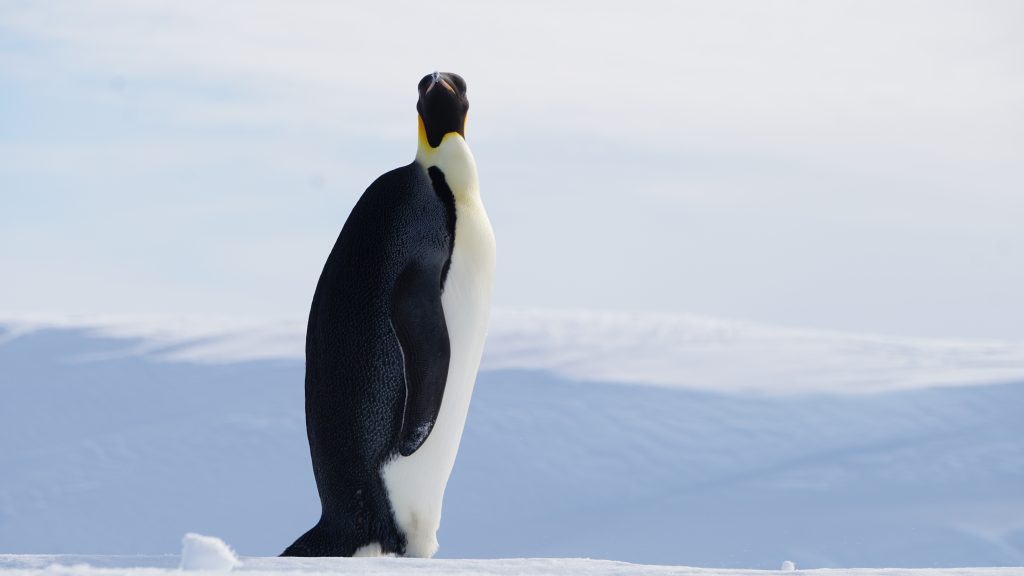
Yet Ben, who when not in Antarctica lives in Westport with his partner, says it’s just another day at his very particular office. “It’s a very niche skill set I have, no use anywhere else in the world,” Ben laughs of the career that’s given him no shortage of stories to tell at the pub. Stories about penguins and their persistent routines, for example. “Mobs of penguins will just go through the Gould Bay Camp (another ALE camp on the southern shore of the Weddell Sea) all day and night,” he says. “They especially get curious when we set camp up every season. They’ll even waddle onto the runway and just lie there.” There’s also the smell. Penguins, he says, can be rather pungent — but he still loves them.
We need your help
READ MORE
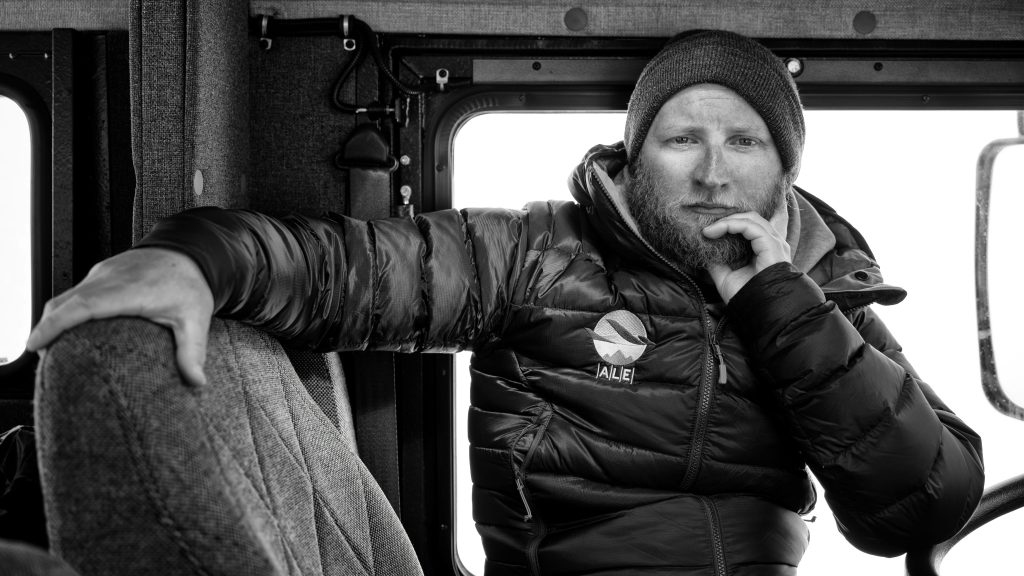
Ben’s a guide for Antarctic Logistics & Expeditions (ALE), a Salt Lake City, Utah-based private outfit that operates a seasonal base camp at Union Glacier. It’s at 79 degrees south latitude. That’s approximately 3000 kilometres south of the bottom of South America and more than 1000 kilometres from Scott Base (which Ben hasn’t visited). The main responsibility of Ben’s job is helping visitors safely have the experience of a lifetime, avoiding dangers like blizzards, crevasses covered by snow that can be 20 to 40 metres deep, and other dangers like slipping on ice.
Being among the vast whiteness of Antarctica, he says, is to be constantly reminded how small we are compared to Mother Nature, and how she can snuff us out without so much as a nanosecond of consideration. The thought, he adds, is very humbling. “The environment puts you in your place. No matter how powerful you are, you’ll never be more powerful than nature. Never.”
Tourism to Antarctica has been booming. Almost 120,000 people visited in the 2024-25 summer season, according to the International Association of Antarctica Tour Operators, a member-led trade association of companies that operate tours to Antarctica, of which ALE is a founding member. Clients come from around the world. There’s bit of a cost: a five day-long trip with ALE, including all meals, lodging in a well-insulated polar tent and flights to Union Glacier Camp that begin and end in Punta Arenas, Chile, can cost more than $32,000 US (that’s $55,000 New Zealand dollars). A nine-day trip that includes visiting an Emperor penguin colony will set you back $62,700 US (NZ $110,000). Other options include a guided ski expedition to the South Pole, where three months of skiing runs up to nearly $100,000 US (NZ $180,000), or climbing Vinson Massif (the tallest mountain in Antarctica), which costs $56,000 US (NZ $100,000). And the price doesn’t cover everything: guests are required to purchase their own insurance and either bring much of their own polar gear, or rent it from the company, depending on the type of trip they are on. Gear alone can cost thousands of dollars if bought new.
Some clients are celebrities, but Ben can’t say who for privacy reasons. Regardless of who they are, or how much money they have, Ben says he’s yet to meet a guest that isn’t awed by the otherworldly, alien landscape. It’s a landscape he now knows about as well as anyone can get to know such a challenging place.
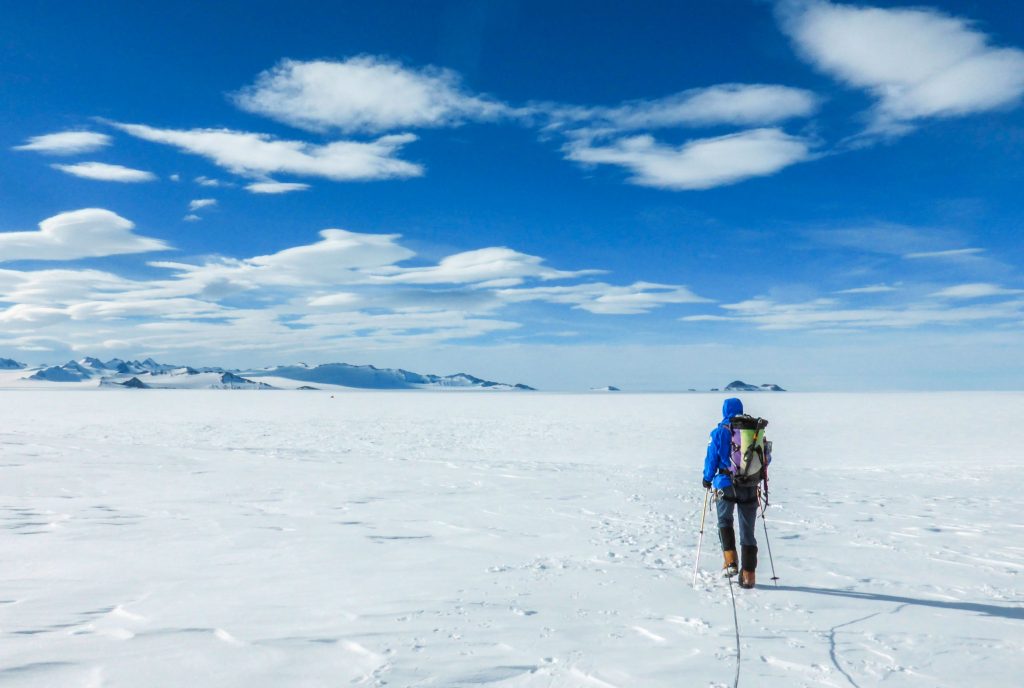
Take the South Pole. Ben’s been there seven times, including three this past season. Normally he flies down, but he’s also driven there three times, and once skied to earth’s southernmost point on what’s known as a “last degree” expedition. It’s so-named because those attempting it are dropped off by plane at 89 degrees south, then traverse the final 111 kilometres — one degree of latitude — themselves. Skiing the “last degree” usually takes about a week. There’s typically a 10-minute break every hour, a quick stop to readjust gear and refuel to get energy levels back up, which means lots of snack and protein bars and dehydrated meals.
There also isn’t much talking, because of a combination of the almost constant movement and the shortness of breath that can come from the higher altitude (the area around the South Pole sits at about 3000 metres, roughly equivalent to being high in the Southern Alps). Plus, everyone’s faces are covered by masks and goggles.
Ben is quick to point out how important that last bit is. Like during the epic storm he experienced this past season, summer temperatures around the Pole are often about -25℃ and the wind can reduce visibility to just a few metres, or less. As Ben explains: “It’s like being in space. Antarctica’s not a place we’re meant to be. You also really don’t want to expose your skin down there. You’ll get frostbite pretty quick.”
But beyond the physical challenges, Ben says the hardest part of a last degree expedition is often mental. The Antarctic Plateau around the South Pole is gradually rolling and almost featureless, meaning it’s hard to know if you’re making any progress. “There’s no visual stimulation to take your mind off your mind,” he says. The area can be maddening in its bleakness.
He shares the story of the first time he was on the ice, in 2014. Ben didn’t start out as a guide, but as a waste operator. That meant emptying and cleaning the camp toilets every day. The toilets, he says, were basically buckets, because there’s no sewer system or Portaloos in Antarctica. Worse, the liquid and solid waste had to be separated.
Yet it was still a dream opportunity for Ben, who graduated from the University of Canterbury with Geography and Geology degrees and did the Christchurch school’s Antarctic Studies programme. “I just wanted to go down [to Antarctica], and luck of the draw, a friend who would do shifts on St John Ambulance did a shift one weekend with a woman who was from ALE, which got him onto it.”
The friend told Ben. And even years later, he’s just as keen as ever.
“The itch is still there,” Ben says after nearly a decade going down. He’s spent so much time in Antarctica, he reckons he’s probably spent about two months in total at the South Pole alone. Experiences that would be unforgettable for most people are so common for Ben that they sometimes blur together. We’re well into our conversation when Ben remembers another storm, this one from the 2018-19 summer season, that ripped through Union Glacier Camp and caused terrific damage.
The sudden 1:30am windstorm roared into the camp, almost blocking out the sunlight (in summer in Antarctica it’s light for 24 hours a day) and slamming down like the hand of an angry, invisible giant. It obliterated eleven hardy polar tents.
“It was like being hit by a tornado,” Ben recalls. No-one was hurt. But eleven tents gone meant eleven staff with no place to sleep—so they camped out in the staff’s common area for the rest of the night.
Swashbuckling as his southern sojourns are, Ben is always glad to be back home on the West Coast. “It’s just completely different from the ice,” he begins. “I really enjoy the freedom. There’s green, there’s nature, and no traffic jams. It’s nostalgic, too.”
Yet Ben says there are similarities as well. “Growing up on the West Coast shaped me into who I am. It even prepared me for the Antarctic. You couldn’t just pop into a shop to get what you need because there wasn’t a huge variety of shops nearby, just like on the ice.”
“Being down there’s a lot like living in a small town in the South Island. You get to know people from all backgrounds, you intermingle, and everyone pitches in to take care of things to get the job done.”
When we speak, Ben can’t stop gushing about the cracker Westport weather — oxymoronic as that might sound when constant rain is the first thing that comes to mind for many people when they think of the West Coast town. But Ben points out that’s a stereotype not unlike the common assumption that it’s always snowing in Antarctica (in fact, he says, most of the continent is a desert, with very little precipitation of any kind).
“It’s been unbelievably warm,” he says of his time back home among the green trees, leafy ferns, blue rivers and Tasman Sea. Though he’s quick to add that, thanks to his annual Antarctic pilgrimages, almost any temperature above freezing can be considered warm.
“I’ve been properly roasting, just cooking.”
He’s not back for long. A few days after we speak, he’s due to fly to South America, to work on an expedition ship operated by Australian company Aurora Expedition. He’ll be sailing across the famed Drake Passage, the roughly 800-kilometre body of water legendary for its extreme waves of up to eight metres, down to the Antarctic Peninsula. Like his ALE job, Ben will be responsible for keeping visitors safe when they venture ashore.
He’ll then be back in Westport again, before going north, where he’ll be working aboard a vessel sailing through the Arctic Ocean and Northwest Passage, getting closer to the North Pole, during the Northern Hemisphere summer. He did something similar in the Arctic in 2024, sailing around the Norwegian archipelago of Svalbard (about 78 degrees latitude north).
Most Antarctic tourists visit by cruise ship and are only actually on the ice for short periods — very different from ALE’s offerings. But more people means increasing stress on an already fragile environment, where even the smallest change can have devastating environmental consequences.
“I think everyone who works or travels in these fragile environments, whether in tourism or science, wrestles with the same question: ‘should I really be here?’ and ‘does my impact, even if it has downsides, also have the potential to create something positive?’” says Ben.
“For me, that’s the personal balance I am always trying to maintain. Tourism sometimes gets talked about only in negative terms, but it can support research and conservation, too. The logistics and resources that tourism brings often make certain science projects possible, ones that might otherwise be too expensive or difficult to run. Plus, it gives visitors the chance to interact with scientists and learn directly about the work being done there, which really deepens understanding.”
“Maybe the most important thing is that tourism gives Antarctica a voice, a global one. People come from all over the world, experience it, and take that story home. I can’t say for sure that everyone becomes more sustainable in their day-to-day life afterward, but I do think Antarctica stays with you. Once you’ve seen it, you can’t forget it.”
Ben’s unsure what the future might hold, both for Antarctic tourism and himself. But he’s pretty certain it’ll involve more seasons. All of this begs a question. What’s the secret to this veritable argonaut of the ice’s success?
“It’s pretty simple,” says Ben. “You follow your compass… and don’t set your tent on fire.”
He does have more serious advice, though, advice which could also be applied to more than just aspiring Antarctic adventurers. “Just give it a go — and if it fails, at least you won’t be wondering what could’ve happened.” There’s also a skill he thinks is absolutely essential.
“You need to be a little bit curious.” He pauses. “And maybe a little bit crazy.”
Words: BEN MACK
Photos: Supplied by BEN COMESKEY
