“Enjoy yourself, that’s my advice.”
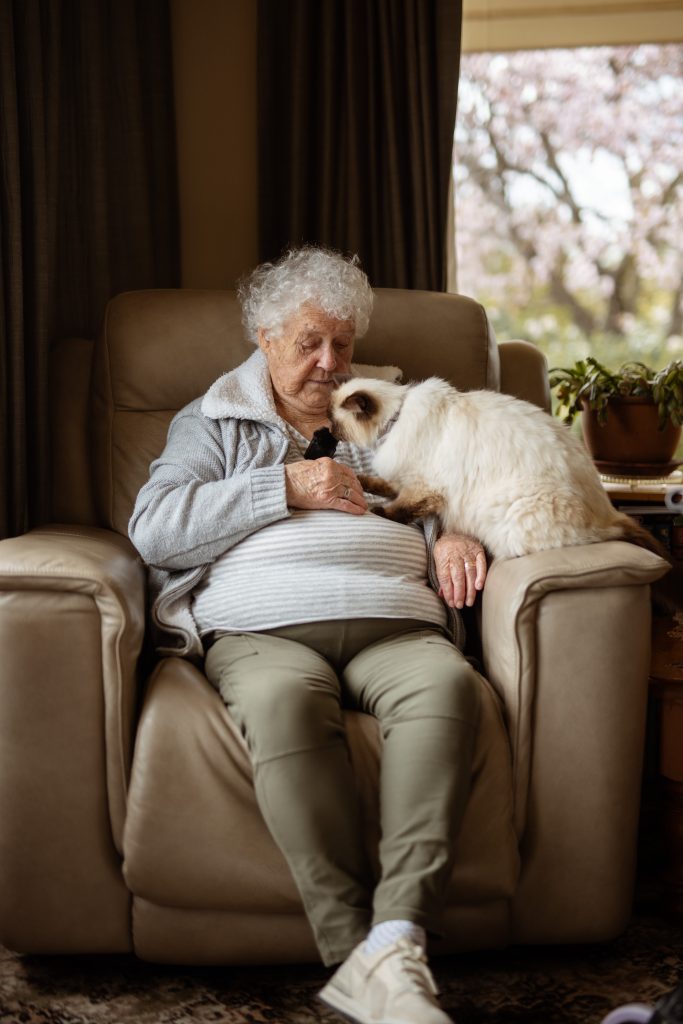
Helen Hillary settles into her Lazyboy chair with her beloved Ragdoll cat Mandy on her lap. I’m visiting her at her home in Frankton, a suburb of Queenstown. She promises to tell “some higglety pigglety stories from my life at the top of the lake”. But where to start when you have had 85 years of life?
In Glenorchy, Helen is known as Mrs H. She was the school bus driver for 17 years, and has also shuttled a fair few tourists around the scenic area. She is a “get on with it” type with a big laugh that works its way up from the bottom of her boots.
Helen was born in a little place called Sedgemere, just out of Leeston, near Christchurch. The wide-open flats of the Canterbury Plains are in her blood, with their braided rivers and patchwork-quilt farms. She says it was a great childhood for her and her eight siblings, though full of “heavy slog”. “We were cheap labour for my parents on the farm, put it that way.” And there’s that laugh, contagious as they come. “But it was fun, it was never a chore.”
As soon as she was able to put cups on a cow, she became part of the milking gang. It was a daily blurry-eyed 4.30am start to round up the cows into the walk-through dairy, where the herd were milked for their cream, which was then sent off to the Tai Tapu Dairy Factory. The kids caught the family’s trusted horses, Blondie, Blue Heather, Ginger and Bonnie, for the ride to school. Saddles were put on only if there was time, “and if there wasn’t, we would just go bareback. I was a country girl, I still am, and a tomboy. I was born between two boys and I had to compete.”
We need your help
READ MORE
After leaving school early, Helen moved to Christchurch, where she met Naylor Hillary at a dance in Latimer Square. Pictures and a whirl around to the tunes of the time were what you did on a Saturday night. The only problem was the bus. The last one was at 11pm and the dance didn’t finish till midnight.
“One night it was raining and we wanted a ride home from the dance, we asked people if they had enough room for three and we all bunched in. And it was Naylor who took us home in an Austin 7. How’s that for Mills & Boons? It ran out of petrol, and we had to push it to the garage while he sat at the wheel.” A burst of laughter erupts from Helen, cutting through Mandy’s purring. “It was a lot of fun.”
Naylor was a painter/decorator who had quiet ambitions to be a farmer. Helen, who had vowed never to marry a farmer, says she was a bit cheated. This is said with a wry grin. “He married me under false pretences because if I had found out I would have walked away.” The laugh this time is a wicked one.
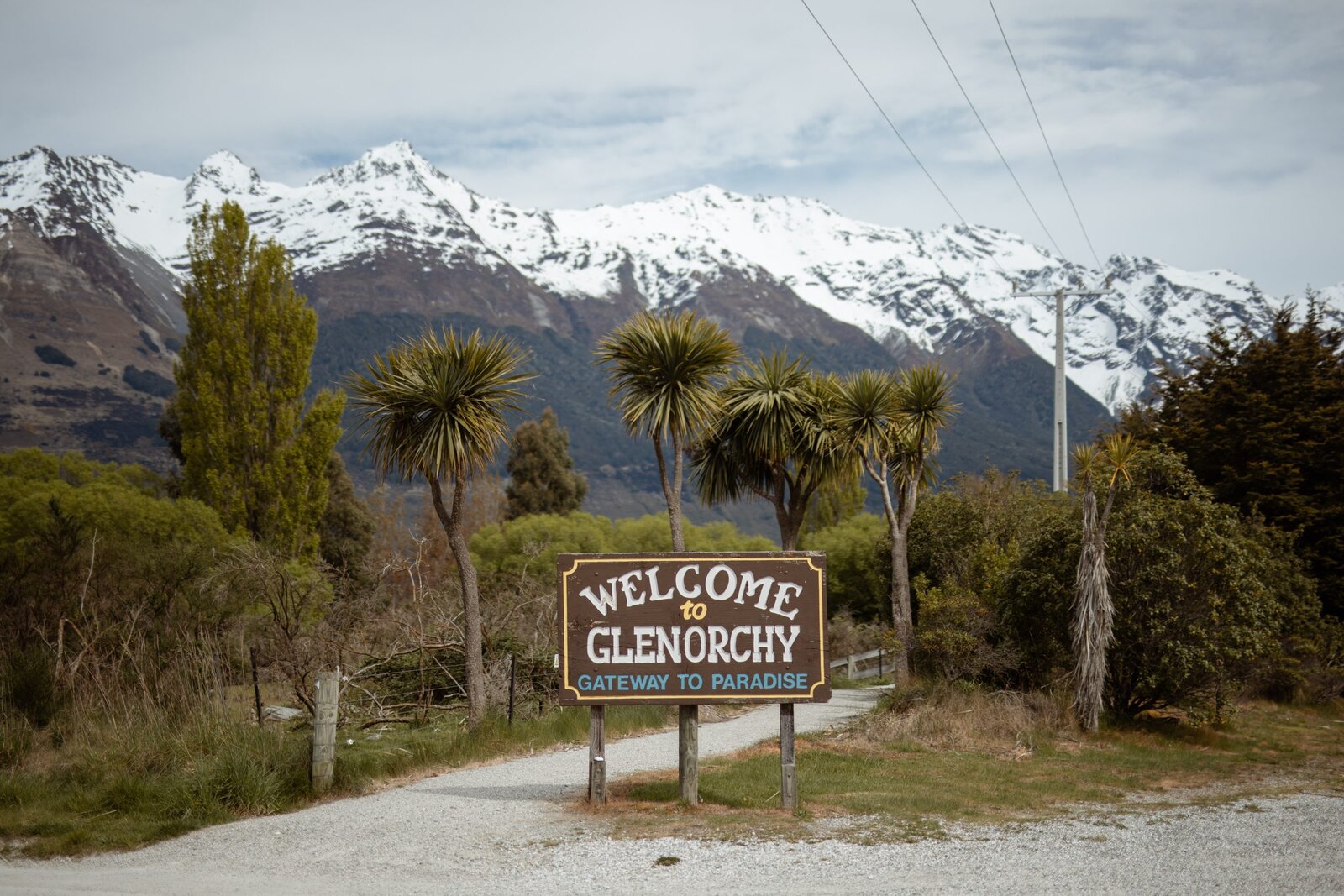
After they were married, Helen and Naylor moved first down to Luggate, Central Otago, and then on to Glenorchy at the head of Lake Whakatipu, where they then bought out their partner in a 500-acre farm. This stretch of land just before the Dart Bridge ̶ with the Humboldt and Richardson Ranges just over its shoulder ̶ would become their home for 46 years. But at that time there was no house. Helen and Naylor had four kids by then and so a roof over their heads was needed. “We shifted a house up there,” Helen recalls. “The road was very windy and narrow, so it got a bit of a bruising getting there.”
The Hillary family’s move to the area was perfect timing for the Glenorchy School, which was struggling to get enough children’s names on its roll. With the Hillarys’ four children and another new family’s five, the school not only scraped its way out of the firing line of the Board of Education, it was allocated a school bus.
“Well, we got a bus but we didn’t have a driver, so Barbara, one of the other mums, and I, both decided to go for our bus licenses. The school stayed open, we went from one to two teachers and the atmosphere and the attitude of everyone there was like a great big family. It was really, really lovely.”
The children called her “Mrs H” and she loved to listen to the “running commentary” as she dropped them home. On birthdays, it was an ice cream shout all ’round and sometimes Helen’s old cat Tina would come along for the ride. “I loved it, I absolutely loved it.”
Another reason Helen jumped at the chance to become the community’s bus driver was as a way for her to extend her horizons, literally. The mountains, so close, could be overwhelming for the girl from the Canterbury Plains. “When we first moved to Glenorchy the mountains felt like they were going to crush me.” Helen’s voice takes on a distant tone as she remembers how hemmed in she felt. “I needed space. So driving the bus got me away from my home. I just needed to see for miles.” Helen remembers one trip with her kids where she was compelled by an uninterrupted view with mountains as a faraway backdrop to stop the car. They were confused and asked their mum what the matter was. “I’m just looking,” she told them. “And I sat there for half an hour looking at that wide view.”
Naylor had a sense of what was unsettling his wife, so he came up with a plan to move to Australia. They went for a farm scouting trip. Looking at the last farm, which boasted a “mount”, Helen asked the farmer where the mountain was. He looked at her and said, “you’re sitting on it”. Helen laughs incredulously and cries, “it was a bump!”. They returned home and when Helen saw the peaks looming over Glenorchy she was no longer daunted. “They welcomed me. We were at Bennett’s Bluff and I knew I didn’t want to leave these mountains.” Something had changed in Helen. The mountains truly became home.
Helen threw herself into the community, helping to fundraise for school outings including trips to the sea in the bus for the country kids who had never seen the in and out of tides. She would drop off supplies to runholders who couldn’t get to town, and once relieved a tired mother by taking her screaming baby for a walk. She even accidentally managed to convince the future Prime Minister to tar seal the dodgy Glenorchy road. “Oh, he was a nice man!” Helen had taken up a second bus driving job for the tourism company H&H. She would finish up the school run, fuel up, clean up and hop into her next bus to take tourists up to the Greenstone and the Routeburn Tracks. One of her passengers was the then-Leader of the Opposition Jim Bolger who, alongside 19 others, was setting off to explore the walking tracks.
“Mr Bolger and his wife sat behind me and we were going down this gravel road and he said ‘the road isn’t too bad is it?’” Helen replied, “yes and no. Prior to me picking you up there were six graders on the road to make it like this today.”
“We got to Bennett’s Bluff, he was looking at the scenery and he turned around and said ‘so you reckon a little bit of tar seal wouldn’t go amiss Helen?’, and I said ‘I’d love it. But there is one thing I would miss. Our road is very windy, and when you have driven it as much as I have you can see the dust clouds and know when a vehicle is coming’.” So the road not only got tar sealed, thanks to Helen, it was widened too.
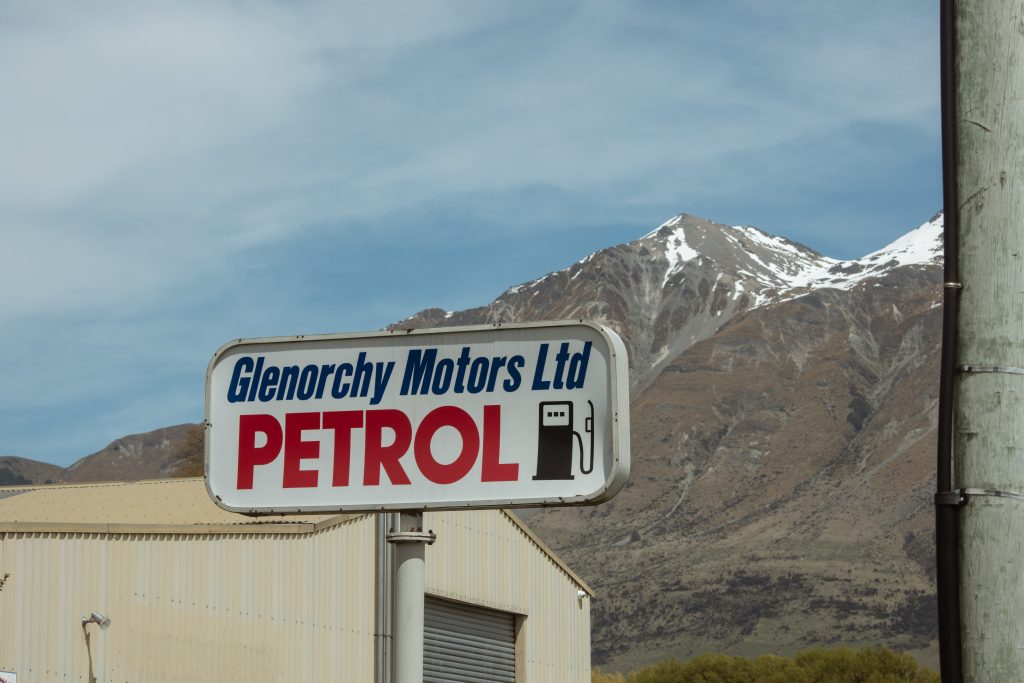
Helen was a go-out-of-her-way type of employee, and she would keep an eye out for Glenorchy’s older residents. Mrs Forbes was one. Without necessarily realising she had noticed, Helen had gotten used to the smoke always puffing out of Mrs Forbes’ chimney when she pulled up to the school in the mornings. When there was no smoke for a few days, Helen decided to check in, using the premise of offering her some cream for her porridge. Knocking resulted in the unlocked door opening a crack and on calling out, Helen heard a small voice calling back.
“I asked her if she would like some cream, and she said ‘yes, but come in and kick the coal range into gear and make me the porridge first, I’m starving.’ Mrs Forbes was ill, and so I went to the district nurse to make sure she got an evening meal sent to her. And I made her porridge with cream every morning until she got better.”
Helen brushes such acts of kindness away as “just what you do, you know what people need in a community and you just get on with it”. A huge sponge cake made by Mrs Forbes was her reward and Helen had to fight off the kids on the bus on the way home. “They all wanted a chunk,” Helen chuckles. Glenorchy, to Helen, was “a great big whopping family. It was lovely,” and although she lives in Queenstown now, Glenorchy has her heart. From where she lives she can still see the mountains that she learnt to love all those years ago.
“Glenorchy has changed, it really has. It used to literally be the end of the road. It was a great place to live and I enjoyed my life there. I wasn’t competing with anybody, I was just doing what I had to do. I think that’s a good way to live. If you want to do something you just do it. Enjoy yourself, that’s my advice.”
Mandy the cat purrs and Mrs H’s memories fill the room. They are as wide as a Canterbury Plain with not a hint of cloud in the sky, and as tall as the ranges that hug Glenorchy with their craggy snow tipped peaks.
Words: Carly Thomas
Photos: Francine Boer
This story is part of the Landlines project (landlines.co.nz). Instigated by Francine Boer, Landlines explores the people and stories who helped shape our rural communities through documentary photography, videography and written features. As time passes, many of these voices will be lost. Landlines exists to capture them. Mrs H’s story was made with the support of Creative Communities NZ.
